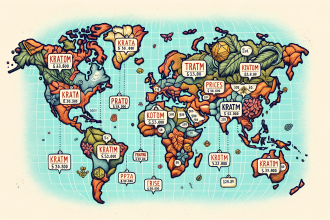
Kratom is a plant-based product that has gained international attention for its diverse traditional and contemporary uses, and pricing can vary widely by country due to factors such as legality, import restrictions, local demand, and product quality. The Kratom plant, scientifically known as Mitragyna speciosa, is native to Southeast Asia, where it has been used for centuries in various cultural practices. In countries where Kratom is legal and commonly sold, consumers often see a wide price range that reflects the strain, form (powder, capsules, extracts), and whether the product has been third-party lab tested; premium, lab-tested products generally command higher prices. For instance, in the United States, prices can range from $10 to $30 per ounce, depending on the strain and quality. In contrast, in countries where Kratom is illegal or heavily regulated, such as Australia or some parts of Europe, prices tend to be elevated because of limited supply, the need for discreet import channels, or the additional costs vendors incur to comply with local rules. This can lead to prices that are significantly higher than in countries where Kratom is more readily available. In tourist destinations and regions with strong online vendor networks, competitive pricing can push costs down, but shoppers should remain vigilant about product authenticity and safety. The proliferation of online vendors has made it easier for consumers to access a variety of Kratom products, but it has also led to concerns about quality and safety. If you are exploring Kratom for the first time, check local laws and read independent testing reports or Certificates of Analysis (COAs) to confirm potency and purity before purchasing, and consult a healthcare professional if you have health concerns or are taking medications that could interact with Kratom. This step is crucial, as the interaction between Kratom and certain medications can lead to adverse effects, making it essential to approach its use with caution and informed awareness.
When considering how people use Kratom across different countries, usage patterns reflect cultural practices, legal status, and available product formats; in Southeast Asia, traditional use often involves chewing fresh leaves or brewing tea for mild stimulant or calming effects, while in Western markets powdered leaf and encapsulated products dominate due to convenience and standardized dosing. In countries like Thailand and Malaysia, where Kratom has deep cultural roots, it is often consumed in social settings, and its use is intertwined with local customs and traditions. Users in many nations report employing Kratom for mood enhancement, pain management, or as a substitute for stronger substances, though scientific evidence is mixed and users should approach it cautiously and informedly. The effects of Kratom can vary significantly based on the strain and dosage, with some users seeking out specific strains for their energizing properties, while others may prefer those that promote relaxation and pain relief. If you are looking to buy Kratom, prioritize reputable, transparent sellers who provide lot-specific COAs from accredited labs, avoid vendors that make unverified medical claims, and consider starting with low doses and single-strain products to assess sensitivity; always verify the legal status in your jurisdiction and prefer legal, aboveboard purchasing channels rather than unregulated marketplaces. This diligence is vital in ensuring that you receive a product that is both safe and effective, as the lack of regulation in many areas can lead to inconsistencies in product quality. Advocacy for sensible, regulated access can reduce harm by encouraging quality control, accurate labeling, and consumer education, and many proponents argue that legalization with regulation offers the best path to protect public health while respecting personal choice. By fostering an environment where Kratom can be safely accessed and used, we can help ensure that users are informed and protected from potential risks associated with unregulated products.