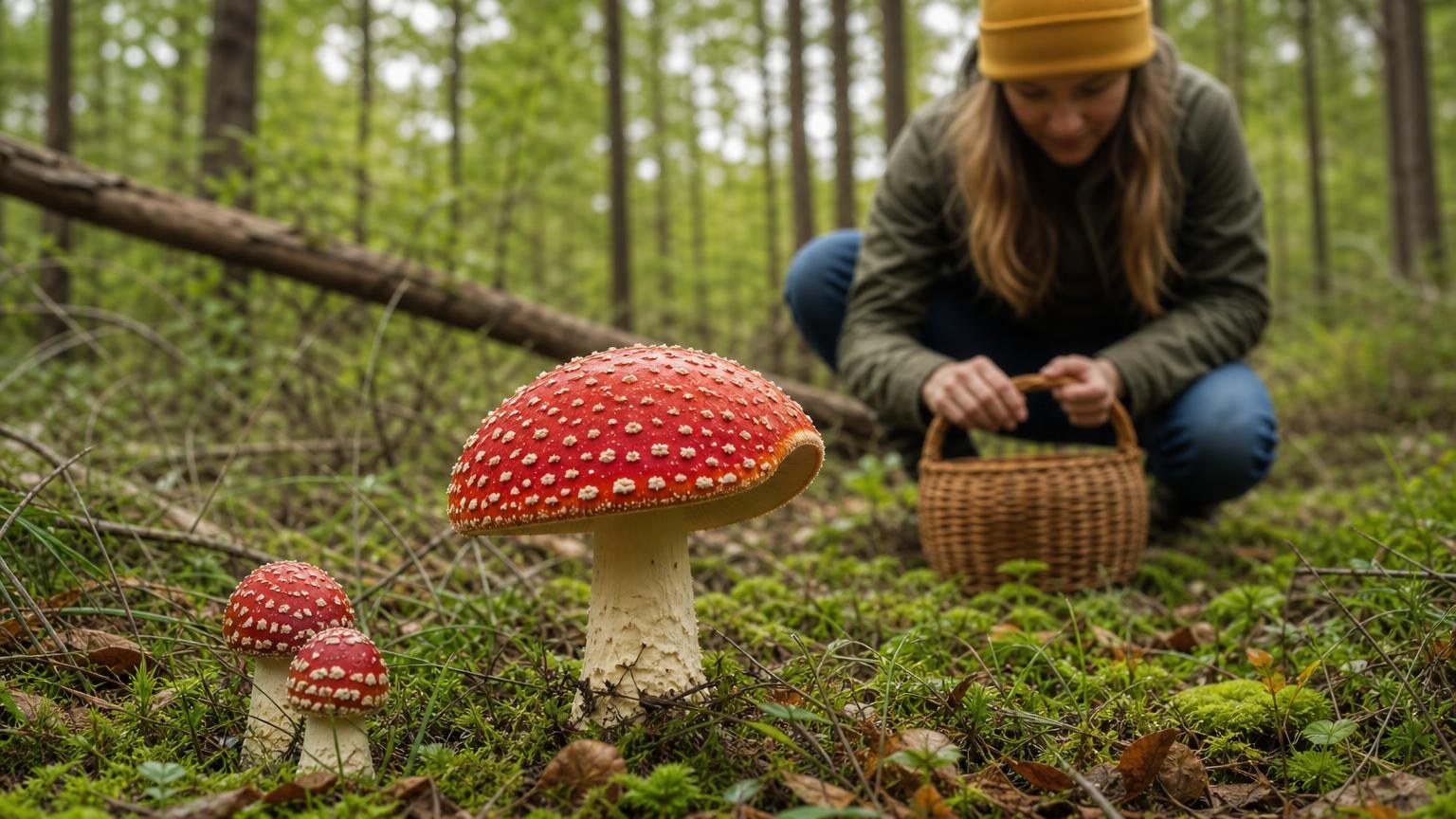
Fly agaric might be the most recognisable mushroom on the planet. It’s the red cap with white spots from fairy tales, Christmas cards and video games. Interest in it has grown sharply as gummies, tinctures and dried caps appear in online shops, which leaves a lot of curious buyers asking the same thing: where in Europe is Amanita muscaria legal, and what does “legal” actually mean for a mushroom that grows wild in half the continent’s forests?
The honest answer is messier than most product pages admit. A shop in Prague may sell dried caps openly, while the same purchase could land you in trouble in Bucharest or Amsterdam. Some countries ban the mushroom by name. Others ignore it entirely, and some regulate it through food safety rules that have nothing to do with drug law.
This guide explains how the rules work country by country and where the grey zones sit. It also shows why “not for human consumption” stickers matter more than you’d think. It isn’t legal advice, and laws change. Treat it as a map of the terrain, then check the current rules in your own country before you buy, carry or post anything.
The Legal Status of Amanita Muscaria Across Europe
The most important fact is that Amanita muscaria is not covered by the UN drug conventions. Its main active compounds, ibotenic acid and muscimol, aren’t scheduled internationally the way psilocybin is. Each European country decides for itself, and the results vary widely.
Broadly, European countries fall into four groups:
- Explicit bans: The mushroom or its compounds are named in national drug legislation. The Netherlands and Romania are the examples most often cited.
- Blanket psychoactive bans: Laws prohibit the sale of any substance that alters the mind, unless it is exempted. The UK and Ireland use this model.
- Food-law control: The mushroom isn’t a controlled drug, but selling it for eating breaks food safety or novel food rules. This applies in much of the EU.
- Largely unregulated: No specific law targets it, and enforcement is minimal. Several Central and Eastern European markets fit here.
Picking fly agaric in a forest is almost never what gets people into trouble. The legal risk comes from selling it, marketing it as something to eat or get high on, and shipping it across borders. If you remember one thing from this article, remember that the act matters as much as the substance.
Understanding the Psychoactive Substances Act and EU Regulations
The UK’s Psychoactive Substances Act 2016 is the clearest example of a blanket approach. It doesn’t list substances. It makes it an offence to produce, supply, import or export anything capable of producing a psychoactive effect, unless it’s exempt, such as alcohol, caffeine or medicines. Fly agaric isn’t controlled under the Misuse of Drugs Act, so simple possession isn’t an offence. Selling it for consumption, or importing it for that purpose, can be.
Ireland got there first with the Criminal Justice (Psychoactive Substances) Act 2010, which targets the sale of psychoactive products in a similar way. Poland, Austria and a few others have adopted their own new-psychoactive-substance frameworks with different scopes.
At EU level there isn’t a single drug law covering Amanita muscaria. Two other frameworks do a lot of work:
- The Novel Food Regulation. Foods without a significant history of consumption in the EU before May 1997 need authorisation before they can be sold. Fly agaric gummies and extracts have no such approval.
- General food safety law. Amanita muscaria is a recognised toxic mushroom, and selling something unsafe as food is prohibited across the bloc.
Many sellers in “legal” countries are still breaking rules. The rules they break are food rules, not drug rules.
Nations with Explicit Bans and Strict Restrictions
A handful of countries have gone further than food law and named the mushroom, or its active compounds, in their controlled substance lists. In these places possession itself can carry penalties, not only sale. The two examples below are worth knowing because buyers most often get them wrong.
Romania and the Total Prohibition Model
Romania tightened its rules sharply in the early 2010s after a wave of “legal high” shops, known locally as etnobotanice, spread through its cities. The government responded with broad legislation against new psychoactive substances. Amanita muscaria is widely reported to be controlled there, and Romanian authorities treat products marketed for their effects harshly.
The practical lesson is simple. Romania doesn’t do grey zones well. If you’re travelling there, don’t carry dried caps, tinctures or gummies, and don’t assume a European online shop shipping “worldwide” has checked whether delivery to Romania is lawful. The shop usually hasn’t checked, and the customs risk falls on the recipient.
The Netherlands and the Smartshop Loophole
Many people assume the Netherlands is the easy option. In 2008 the Dutch government banned fresh psilocybin mushrooms after several high-profile incidents. The list of prohibited species added to the Opium Act included Amanita muscaria, even though it has a different chemistry and was never at the centre of the controversy.
Smartshops adapted by selling psilocybin truffles, the underground sclerotia, which fell outside the ban. That workaround applies to truffles, not to fly agaric. So the famous Dutch loophole doesn’t cover the red-capped mushroom at all. Tourists buying “magic truffles” in Amsterdam are on firmer ground than anyone ordering Amanita products to a Dutch address.
Grey Areas and Unregulated Markets in Central Europe
If you search for fly agaric products, many shops will turn out to be based in the Czech Republic, Poland, Slovakia, Hungary or the Baltic states. That’s not a coincidence. In parts of Central and Eastern Europe the mushroom isn’t named in drug legislation, and enforcement against small sellers has historically been light.
The Czech Republic is the best-known example. Dried caps, tinctures and topical ointments sold for “external use” have been available openly for years. Folk medicine traditions there include rubbing fly agaric tinctures on sore joints, which gives sellers a cultural cover story.
Grey doesn’t mean safe, though. A few cautions apply:
- Food law still applies. Selling Amanita as an edible product can breach EU food rules even where drug law is silent.
- Rules shift quickly. Countries in this region have repeatedly added substances to their lists when a product became visible in the media.
- Germany is a trap. Neither the mushroom nor muscimol is listed in the main narcotics law, but German food authorities treat edible fly agaric products as unsafe. Sellers there face real enforcement risk.
The pattern across the region is the same. Products survive because they’re labelled in ways that keep them technically outside consumption rules. That brings us to the most important distinction in this whole subject.
The Distinction Between Possession and Sale for Consumption
In most of Europe, owning a fly agaric mushroom is not a crime. People photograph them, dry them for craft projects, or keep them for mycology collections. Outside the countries with explicit bans, possession on its own rarely triggers anything.
Sale for consumption is a different matter. Under the UK and Irish psychoactive laws, supplying something knowing it will be consumed for its effects is the offence. Under EU food law, placing an unsafe or unauthorised food on the market is the offence. Either way, intent and marketing decide the outcome.
Here’s how that plays out in practice. A UK shop selling dried caps as decorative items with no dosing information sits on very different ground from one selling “microdose gummies” with serving suggestions and testimonials about relaxation. They may be the same mushroom, but they carry entirely different legal exposure. Courts and trading standards officers look at product descriptions, packaging, social media posts and even customer reviews to establish what a product is really for.
Labeling Requirements: Not for Human Consumption
The “not for human consumption” label is everywhere in this market, and buyers often dismiss it as a joke. Legally it does real work. It signals that the seller is not supplying food or a psychoactive product, which keeps the item outside food regulations and, in some countries, outside psychoactive supply laws.
The label only holds up if everything else is consistent. Regulators routinely ignore the sticker when a website lists doses, describes effects, or sells the product in gummy form. Nobody buys a strawberry-flavoured decorative object. If a product is clearly made to be eaten, the disclaimer won’t protect the seller, and in strict jurisdictions it won’t protect the buyer either.
Importing Fly Agaric: Customs and Cross-Border Risks
Here’s a scenario that catches people out every year. Someone in Ireland or the UK orders tincture from a Czech shop. The product is sold openly where it ships from, and the buyer assumes that makes the order fine. Then customs intercepts the parcel, and a letter arrives.
The law that matters is the law at the destination. Importing a psychoactive substance into the UK can be an offence under the 2016 Act even when the seller operates legally at home. Since Brexit, parcels from the EU go through full customs checks, and declared contents are visible. Shipping into the Netherlands or Romania carries the obvious risks covered above.
Before ordering across a border, run through a few checks:
- Check your own country’s rules, not the seller’s. A shop’s “legal in the EU” claim is marketing, not legal advice.
- Read the product listing like a regulator would. Dosing guides and effect descriptions make an import look like supply for consumption.
- Avoid edible formats. Gummies, capsules and chocolates are the most likely to be treated as food or psychoactive products.
- Don’t carry it while travelling. Airport and land-border checks rarely end well for unidentified dried mushrooms.
Within the Schengen area there’s no routine border control, but that doesn’t make the product legal on arrival. It only means you’re less likely to be stopped before you reach somewhere it may be banned.
Ethnobotanical Traditions and Modern Legal Exceptions
Fly agaric has a long history in northern Eurasia. Siberian peoples such as the Koryak and Khanty used it ritually, and accounts of its use go back centuries. In Europe the traditions are mostly medicinal and folkloric. Tinctures for joint pain appear in Czech, Polish, Lithuanian and Russian household remedies, and the mushroom’s image runs through Scandinavian and German folklore.
These traditions matter legally in a subtle way. European law rarely grants explicit religious or cultural exemptions for psychoactive substances. There’s no fly agaric equivalent of the peyote exemptions found elsewhere in the world. Tradition still shapes the market, because topical “rub” tinctures sold for joints have a plausible non-psychoactive purpose. That purpose helps them survive in places where edible products wouldn’t.
It also affects enforcement priorities. Authorities in countries with strong foraging cultures tend not to target people for picking or keeping mushrooms. They focus on commercial sellers, especially those marketing to young people online. If you’re interested in fly agaric for its history or for mycology, you’re generally on safe ground across most of Europe. If your interest is in consuming it, you’re relying on gaps that weren’t designed for you.
Future Outlook: Potential Shifts in Fungal Legislation
The direction of travel points towards tighter rules, not looser ones. Amanita products sold as “legal psychedelics” have grown quickly, and gummy brands are pushing them into mainstream e-commerce. That visibility tends to trigger regulators. Food safety agencies in several countries have already issued warnings about muscimol products, and poison centres have reported more calls linked to them.
A few developments are worth watching over the next couple of years:
- More food-law enforcement: The quickest route for regulators is to treat edible Amanita products as unsafe or unauthorised novel foods. No new drug legislation is needed for that.
- Additions to national NPS lists: Countries with new-psychoactive-substance frameworks can add muscimol relatively quickly if a problem gets media attention.
- A split from psilocybin policy: Several European countries are debating medical access to psilocybin. Any loosening there is unlikely to extend to fly agaric, which has a different chemistry, a narrower research base and real toxicity concerns.
So, back to the original question. Fly agaric is legal to own across most of Europe and banned outright in a few places, notably the Netherlands and Romania. In most other countries it sits in grey territory where selling it to be eaten is the real problem. The UK and Ireland catch supply through psychoactive substance laws, and the EU at large catches edible products through food rules. Countries like the Czech Republic tolerate topical and “not for consumption” products, but that tolerance is never guaranteed. Always check the law where you live, not where the seller is based, and treat any product marketed with doses as a red flag.
Cross-border shopping comes up again and again in this subject, and the payment side deserves the same care as the legal side. If you buy from European sellers regularly and want a simpler way to handle digital payments, Robin Hood’s offers an easy route into everyday cryptocurrency transactions. Learn More about how it works before your next international purchase.