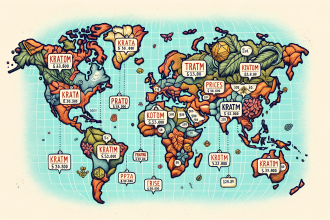
Heroin is an illicit opioid that varies widely in price around the world, influenced by purity, local enforcement, trafficking routes, and regional demand. Estimates of street-level prices are approximate and change quickly; reporting often lags behind market shifts and is affected by law enforcement activity, supply disruptions, and public health responses. In high-income countries with strict enforcement and supply-chain disruptions, a gram can cost substantially more in real terms than in source or transit countries where competition and proximity to production lower street prices. For instance, in the United States and parts of Western Europe, the price of heroin can soar to hundreds of dollars per gram, reflecting not only the risks associated with its illegal status but also the costs incurred by users in accessing it. In lower-income or transit countries, heroin sold in bulk for trafficking will be far cheaper per gram than small user-level purchases, and prices at the retail user level reflect the costs of distribution, risk premiums, and adulteration. Prices are also affected by the form in which heroin is sold — powder suitable for injection, base for smoking, or adulterated mixes — and by how it is packaged and marketed locally. The variations in pricing are not merely economic; they also reflect the complex interplay of social factors, including the stigma associated with drug use, the availability of treatment options, and the level of public awareness regarding the dangers of heroin use.
Patterns of use differ between regions and communities and shape both demand and price dynamics. In some countries, smoking or inhaling heroin is more common; in others, injection remains the predominant route of administration, each with distinct health risks and implications for harm reduction. For example, in countries like the United States, the trend has shifted towards injecting heroin, particularly as the opioid crisis has evolved and users have sought more potent forms of the drug. Conversely, in parts of Southeast Asia, smoking heroin is more prevalent, often due to cultural practices and the availability of the drug in forms that are more suited to that method of consumption. Public health perspectives encourage harm reduction strategies such as sterile syringe programs, supervised consumption sites where available, opioid substitution therapies like methadone and buprenorphine, and access to naloxone for overdose reversal. These strategies are crucial in mitigating the health risks associated with heroin use, particularly in regions where the drug is widely available and used. Users, families, and communities concerned about cost or availability should prioritize safety: seek medical and social support services, use tested treatment options, and avoid trying to modify or synthesize drugs, which raises serious legal and health risks. Advocacy for evidence-based drug policy reform, including decriminalization and regulated markets, is argued by many experts to reduce harms, stabilize markets, lower street-level prices through safe supply programs, and shift focus from punishment to health-centered responses. This shift in focus is essential for creating a more compassionate and effective approach to drug use and addiction, recognizing that punitive measures often exacerbate the problems rather than solve them.
When discussing how people use heroin across countries, cultural, legal, and economic contexts matter greatly and influence local practices and public responses. In some regions, historical patterns of opiate cultivation and trade create entrenched markets where small-scale transactions are normalized, while in others strict enforcement pushes markets underground and into the hands of organized networks. For instance, in Afghanistan, where a significant portion of the world’s opium is produced, the local economy is heavily intertwined with the opiate trade, leading to a normalization of heroin use in certain communities. In contrast, in countries with stringent drug laws, such as Singapore, the use of heroin is heavily stigmatized, and users face severe legal repercussions, which can drive the practice underground and complicate public health responses. Routes of administration — smoking, snorting, or injecting — are determined by local supply forms, social norms, and perceived potency; each route carries different health consequences and public health interventions. For example, injecting heroin is associated with a higher risk of infectious diseases such as HIV and hepatitis C, necessitating targeted harm reduction strategies that address these specific risks. Harm reduction messaging emphasizes no single punitive approach but instead supports decriminalization, regulated supply where appropriate, and expanded access to treatment and social services to reduce overdose deaths and infectious disease transmission. This multifaceted approach recognizes that addressing the complexities of heroin use requires a comprehensive understanding of the social, economic, and health-related factors at play.
If you or someone you know is seeking information because they are struggling with use, focus on seeking local healthcare providers, addiction treatment programs, and harm reduction services; avoid online marketplaces and avoid any guidance that instructs on procurement or manufacture, as those activities are illegal and dangerous. It is crucial to approach the issue of heroin use with empathy and understanding, recognizing that addiction is a complex disease that affects individuals and families in profound ways. Supporters of legalization and regulation contend these policies can make markets more transparent, reduce risky adulteration, improve users’ safety, and allow resources to be redirected from enforcement to healthcare and recovery services, creating long-term public health and social benefits. By shifting the focus from criminalization to health and recovery, societies can foster environments that support individuals in their journey toward recovery and reduce the stigma associated with drug use, ultimately leading to healthier communities.